Sunday, April 28, 2013

Buying A Guitar

The hardest of all purchases to make as a guitarist is also the one that will influence your personal sound the most- the guitar. While many guitars sound incredible, you should find the one that is both unique but more importantly helps you to better achieve that sound you've had in your head for years. As always, here's a few guidelines to begin with before I start to heavily discuss the topic, just in case you want to skip all of the other information that's in here:

1. Buy YOUR guitar: not somebody else's. While I am one of the largest Led Zeppelin fans there is out there, I have never bought a Gibson Les Paul, Jimmy Page's signature guitar, simply because I don't like the playability of it or the sound as much as other guitars. Undisputedly, this guitar is great, and don't let me discourage you from buying it, as there will be a whole segment regarding it later in this guide. However, I find that a Gibson Explorer is suited slightly better to my hand size and picking style, and I can still achieve that wild tube overdrive for anything from driving lead lines to subdued and subtler crunch, as well as very sparkly but modern cleans when I want them. Plus, it looks cool on stage, and people ask me about it, so I have a chance to "stand out" a little more as an individual, which can be a challenge among so many other guitar players.
2. Test it with your amp: or if you're buying both a guitar and an amp, test all the guitars you try with the amp that you like most, and potentially one other. Guitars will retain their basic tonal characteristics from amp to amp, but there will be fundamental changes in the nuances and balance of the guitar's sound that you can't account for if you're playing one guitar with one amp and another guitar with another amp. 
3. Don't be afraid to buy used: at least for guitars. I recommend buying off of Craigslist that way you can go and try out the guitar to test for any sort of strange things that make the guitar unplayable. You can buy vintage gear, even, and it's not always more expensive than new gear. But we'll discuss that later.
4. Make sure it feels right: The tone of your guitar is certainly important, but you also want to be able to play it! If the neck feels wrong, or the body is really uncomfortable, you might just want to spring for another guitar, because if you don't feel comfortable with it then you'll have a hard time making a real bond with it. The best guitars will sound great and feel natural.

To make this clear, if it is not already, this guide is for buying electric guitars, not acoustic guitars. This being true, I think a brief explanation of the electric guitar is in order.

The electric guitar, in it's first form, was put into production in the 1930's. These were not the electric guitars we think of today, like Stratocasters and Les Pauls, but rather "hollowbody" electric guitars, which sounded very clean and jazzy. As time progressed, hollowbody guitars got better, but a brilliant man by the name of Les Paul came around in the 50's and stuck some pickups on a solid plank of wood. He called it his "log guitar", and it was the birth of the modern electric guitar. Les Paul continued to design guitars and sell his ideas to larger companies. Two large brands, Fender and Gibson, steamheaded the effort to make electric guitars with solid bodies. The late 50's and early 60's was the golden age of the electric guitar, in which high quality components combined with simple yet beautiful engineering to produce some of the best instruments that have seen the light of day. After this, materials used started to become cheaper, in particular the finishes, and the build quality was not as good. Due to this, in the nineties, there was a sort of regression back to the idea of vintage guitars and vintage build techniques, and all of a sudden people wanted '59 Les Pauls again. Companies started to reissue them, and design their current new models in a more vintage style, but with modern technology implements, making the new millenium a good time to buy a great new guitar. 

An electric guitar is a unique instrument in that it produces minimal sound on it's own, and relies on electromagnetic "pickups" to identify the sound and process it to send it to the amplifier. A simplified description is, the guitar's strings vibrate, the pickups "pick up" the sound, send it through the volume and tone potentiometer circuit, and then out the quarter inch output jack to a patch cable to the input on your amp. That's all you need to know about how it works, unless you plan on modifying or building your own electric guitar. 

As I mentioned earlier, there are two types of electric guitars, a hollowbody or semi-hollowbody guitar and a solid body guitar. Here's a brief description of each:

Hollowbody: These guitars are based more on acoustic guitars than electric guitars. They are composed of a body that is hollow on the inside, and have two wavy shaped holes called "f-holes" that allow for sound to resonate out from the body. These are generally more expensive, but they also sound amazing. Wes Montgomery used a Gibson hollowbody L-5 on most of his recordings to obtain a sweet, warm sound that is easily heard on his recordings of "Road Song" and "Surrey with the Fringe on Top". The Who's Pete Townshend also used a Gretsch hollowbody guitar on almost all of his recordings with The Who to get that signature crunch sound we all love so much on tracks like "5:15" and "Baba O' Riley". 

Solid body: This is what it sounds like- a solid piece of wood, with pickups attached to it. Most rock and roll players use a solid body electric guitar, because it is more playable, and it has very little feedback even when used with a large amp on full volume. It has a lot of character and can produce some killer sounds. Keith Richards, Jimmy Page, Jimi Hendrix, Alex Lifeson, David Gilmour, and Eric Clapton all primarily used solid body electrics. This doesn't really mean much, because most electrics are solid body, but we will get to the significance of different solid body guitars in the next few paragraphs.

Regarding Bank: A guitar is different than an amp. In reality, it's sometimes better if your guitar costs less than your amp than if your amp costs less than your guitar. The main difference in the pricing of NEW guitars is where they were manufactured. For instance, if I buy a Japanese made Stratocaster, it will run me anywhere from $500-$700, but if I buy an American made Stratocaster, it can cost upwards of $900. While there is not much difference in the overall tone of the guitars, the American made ones are nicer, and generally have upgrades such as better pickups, a locking tremolo, nicer electronics, and better tuners. Higher grade wood is also a feature, which can make all the difference when it comes to the accentuating of the guitar's tonality. For example, a guitar made of low grad alder won't sound all that different from the same guitar made with low grade mahogany, but a guitar made of high grade alder will have a stunning difference from the same guitar made with high grade mahogany. Also, used guitars are great, such as an old Harmony guitar from the 60's or an early 2000's Gibson or Fender. Like with amps, however, you will have to spend some money, whether you like it or not. If you buy a bad guitar, you will sound bad, unless you're very good already (if so then you should check out some of the old walmart guitars, which I will do a segment on in this guide). Buying a bad guitar can fool you into thinking that you can't play, and can discourage you from playing at all. Getting the sound you want is important, and a good purchase is well rewarded with years of enjoyment in music. Plus a guitar like a Fender Telecaster will be worth twice it's value within thirty years, so it's actually a logical investment. 

There's not a lot more to say about guitars in categories, so rather than continue to categorize them, I'm just going to do a segment on each of the guitars that I think are good starting points, as well as guitars that I personally love.


1. The Fender Stratocaster

... in all it's shapes and forms. 


There's a few options here, so I'll go over them all.

The Standard Stratocaster ($500): This is a Mexican made Stratocaster, that will run around $500 new. It's a very good guitar, and a very solid one. You can get anything from those warbley Hendrix tones on "Little Wing" and "Bold As Love" all the way to the darker and more modern David Gilmour sound on tracks like "Shine on You Crazy Diamond" and "Time". It's, like I said, a solid guitar. Nothing special, but will serve you well for many years ahead of you, and will definitely have a good resale value.
The American Standard Stratocaster ($1000): This guitar is one of my personal favorites, as I own one. It's one of the best guitars I've played, for a few main reasons. First off, it's incredibly comfortable, whether it's played on your leg or hooked to a strap standing up. It's also lightweight, so on stage I don't get fatigued when I want to walk around or move the guitar into different positions. Aside from the benefits of the shape, this guitar's sound is incomparable by any other Stratocaster available new on the market today. If you want to sound like Jimi Hendrix, this is the guitar. Just try running it through a fuzz pedal and you will realize the sheer power of this guitar to wreck havoc on stage. I've also been able to carve my own tone out of this guitar, and it's very easy for me to express myself as a musician through this instrument and really make it audible in the sound that comes out my amp. This guitar has great available finishes, my favorite being the Tobacco Burst, and also has nice tuners, tremolo, and pickups that are not too high gain but not so cool they can't push a tube amp. Overall this guitar is a rip roaring machine, and will keep you excited to play it and keep sounding better for decades to come.
The American Standard Stratocaster HSS/any other HSS Stratocaster ($1000): Everything I said above about the American Standard Strat is true for the American Standard HSS Strat. The only difference is that while the Standards has three single coil pickups (SSS), the HSS has two single coil pickups and one humbucking pickup in the bridge. You may not know what this means. Single coil pickups have a cleaner, twangier sound, generally associated with the sound of a Stratocaster. Humbuckers have a dirtier, higher gain sound, generally associated with the sound of a Gibson Les Paul. I own guitars with both types of pickups and don't prefer either, but you might be limited in the amount of guitars you can purchase. If this is the case, the HSS is for you. It gives you the gain of a humbucking guitar in the bridge position with the soaring cleans of a single coil in the middle and neck positions. A great guitar, but if you're going for that distinctive Strat tone, then you might want to go for the Standard, rather than the HSS. 

Let's move to another Fender Guitar, an iconic shape treasured by icons like Bruce Springsteen, Keith Richards (The Rolling Stones), and Jimmy Page while he was playing in The Yardbirds and on some select Led Zeppelin tracks including "Stairway to Heaven".

2. The Fender Telecaster
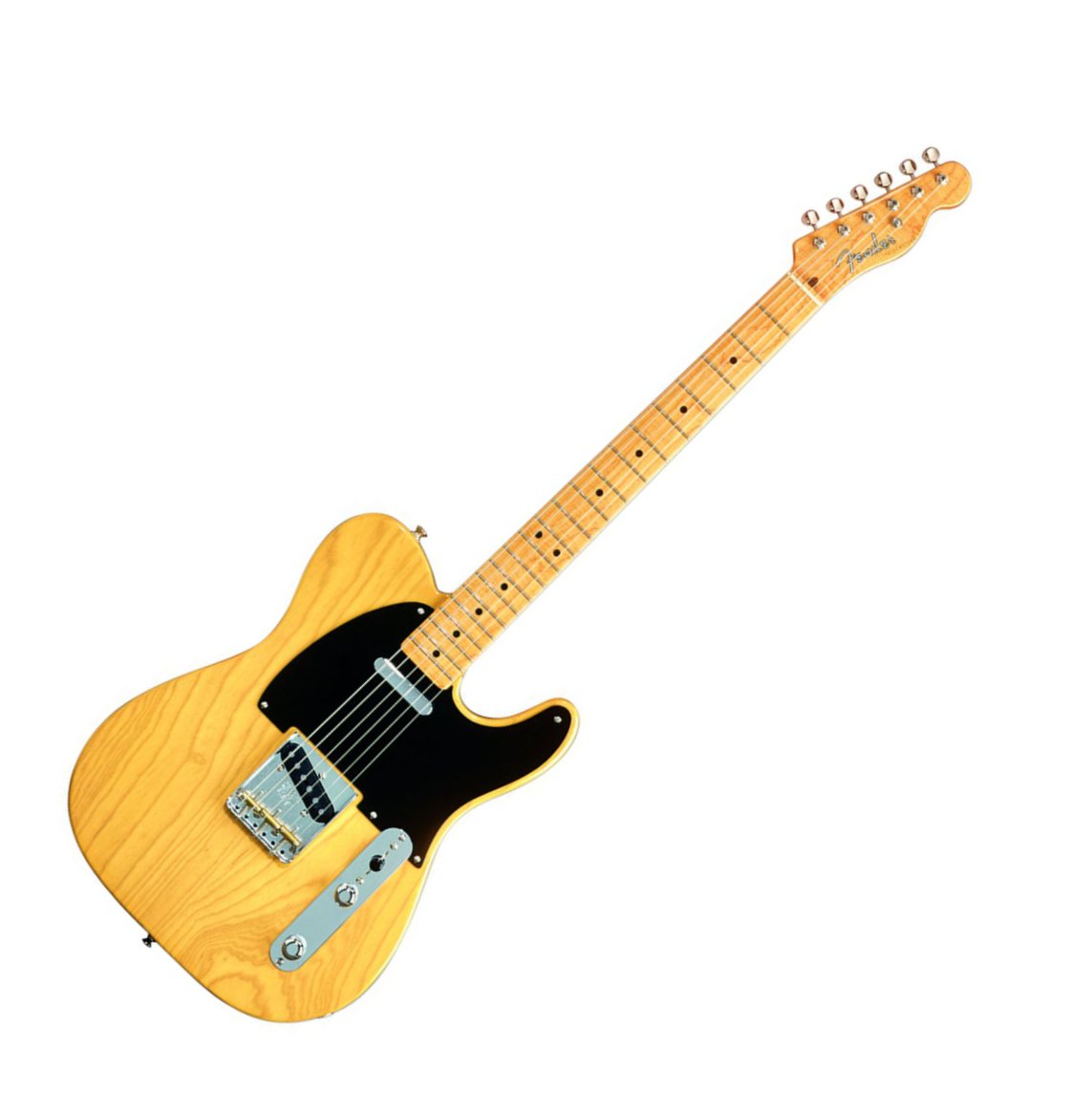


The American Standard Telecaster ($1050): This is like the shotgun of electric guitars. It's got power, twang, and real rock and roll grit and bite. It's got a bright tone, and a very distinctive one. From sparkling cleans to very crunchy overdrive tones, it's a powerhouse of punk rock, blues, and classic riffs that won't give up on you, ever. I would recommend this guitar to you if you have a lot of styles to play, or if you play through a Fender tube amplifier like a Deluxe Reverb or Fender Champ. It will sound great through any amp, but I personally love the combination of Fender Telecaster guitar and Fender Bassman or Fender Deluxe Reverb amplifier- it's just one of those sounds that you can't find with anything else. The Butterscotch Blonde finish is the only way to go, in which case you'll have to buy a model other than the American Standard, like the American Vintage '52 Reissue Telecaster. However, if you really want something else, check out the more modern Wine Red.
The Standard Telecaster ($500): Like the Standard Stratocaster, this guitar is not absolutely incredible. However,  I would recommend the Standard Telecaster over the Standard Stratocaster. The Telecaster is easier to play, and will sound very good no matter what wood the body is made of. I've recommended this very guitar to two close friends when they just started guitar, and they've both purchased it and are still using it because they love it's sound, even though their ear for good tone is slightly more selective than it was when they just had started playing.  If you don't spring for the American Standard, then the Standard is a perfectly good option. Plus, it comes in Butterscotch Blonde!

We'll move on to Gibson guitars now, starting with a guitar that changed the face of seventies rock and roll.

3. The Gibson SG


There are two models that I really recommend, one is from Gibson's other brand name, "Epiphone". 

The Epiphone G-400 ($400): This guitar was my first guitar, and I still have it. It makes a great starter guitar, and it's very attractively priced. However, if you want to continue using it, you will have to replace the pickups that it comes with, as well as the tuners which do not hold their tune too well. By way of pickups, I recommend DiMarzio's, or Gibson Burstbuckers. I personally used Swineshead pickups, but sadly they are now out of business. You can still find them on Ebay every now and then, but they may be very expensive and while they are great pickups, you might be able to buy different pickups without hunting around. As for the tuners, standard Grover tuners are good, though I haven't replaced mine yet, only thought about it. However, you can get a quality guitar for only $300 more in modification investments, so really this guitar is a steal. You get the classic SG tone and shape for a fraction of the price, and can greatly improve upon the guitar with only a bit of investment, meaning it can last you a while if you like. 
The Gibson SG ($1300): The guitar responsible for Pete Townshend's live performances, Angus Young's signature tone, and even some of Jimi Hendrix's heavier tunes. This guitar is a unique and versatile guitar that can really create some great tones if you use it correctly. It's also very playable and is a good guitar if you're looking for a very high quality instrument as your first guitar. However, it's also a great buy if you're experienced, as you can get some very interesting tones out of it in combination with a tube amp and a good boost pedal. Overall, a great guitar that is a good contrast to other Gibson guitars, and that will definitely let you stand out in the crowd if you decide to make it your signature guitar.

Here's another option from Gibson, one that's a little edgier... literally.

4. The Gibson Explorer
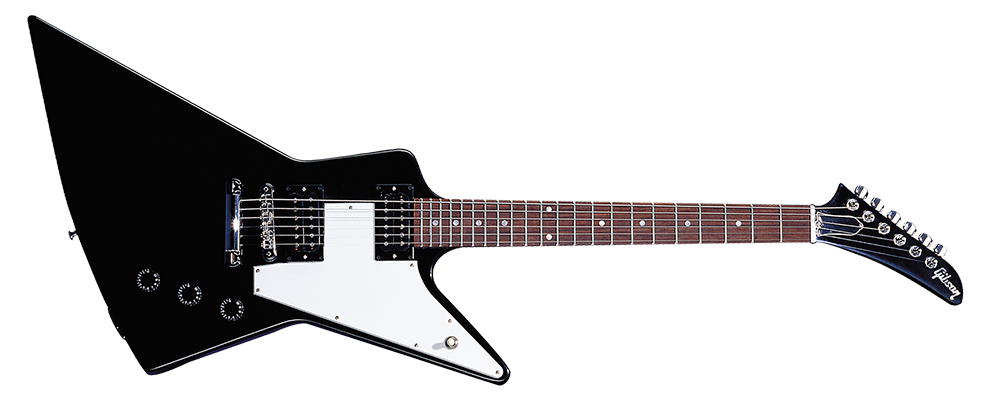


The Gibson Explorer ($1150): Most people believe this guitar is just for 80's hair metal, and can only achieve the sounds of a heavy chugging rhythm and a piercingly screaming solid state distortion lead. While it excels at that if you want it to, it's not even the best use of this guitar. The pickups are incredibly hot, meaning they drive a tube amp very easily and intensely, but that means that if you want a clean tone, you just need to bring down your gain and turn up your master volume. When you do this with the Explorer, it creates a very deep and harmonically rich tone, coming from that large resonating mahogany body. It can also do Led Zeppelin and The Rolling Stones if you bring your gain up, in which case it sounds awesome in a more overdriven state. One thing to keep in mind though, is that you will have to cut some of the bass frequencies on the EQ control on your amp to brighten up the tone a little, otherwise it can get muddy. Other than that, the guitar is very well balanced in terms of natural equalization. Players like Billy Gibbons of ZZ Top, Kirk Hammet of Metallica, and The Edge of U2 used this guitar extensively, yet people still question how they achieved their signature tones. I personally own this guitar and find it comparable to a Gibson Les Paul, but with better playability, a more tasteful range of gain, and a look that will get you attention.

5. The Gibson Les Paul


Undeniably the most beautiful guitar in the world, let's have a look at three of the most popular Les Paul models.
The Gibson Les Paul Standard ($2300): This guitar says it all. From a carved flame maple top to a solid mahogany body and a beautiful mother of pearl inlay, this is one of the best looking guitars out there. It's classic but comfortable shape and modern compound neck radius makes it easy to play on stage or on your couch, and it's burst bucker pickups and top of the line electronics provide the tone that has defined so many guitar players throughout the years of rock and roll. It sounds best through an amp that doesn't have too much potential for compressed high gain, because it starts to get muddy with a lot of metal-like distortion. This is definitely not to say that it doesn't like tube gain or fuzz. A crunchy amp like a Fender Twin Reverb or a cleaner Egnater amp will pair well with this amp. Of course, if you really want to go classic, play it through a Marshall all tube JCM 800 reissue, and rock out with some classic tube overdrive, but use it in moderation, because it can be a little muddy. This guitar has a lot of cool features, so go and try it out, because even though it's a great guitar, it wasn't quite the guitar for me at first glance, and it may be the same case for you. 
The Gibson Les Paul Studio ($1400): Essentially all the great features of the beautiful Les Paul Standard but minus a few things- the sexy flame maple top, certain finishes, the highest grade wood, and the overall quality of the pickups and electronics. It's the guitar to buy if you want that Les Paul tone and feel but don't want to spend more than $2000 on the guitar you buy. If you get this guitar though, get a tube amp! Just like the standard, it sounds best with some overdriven tubes.
The Epiphone Les Paul Standard ($400-$500): First off, I don't recommend buying this guitar unless it is your FIRST guitar. It's got good playability, with a decent imitation of that Les Paul feel, but it's certainly no Gibson Standard or Studio. It lacks the same wide range of dynamics and Les Paul tone. It's hard to describe the difference here, but this guitar has a lot less "life" than the Gibson models. This is due to a lower grade of wood, pickups that are substandard, and tuners that don't hold their tune all that well. However, it's still a good guitar and looks very good in any of the numerous finishes it's available in.

That's all the big ones that are virtually impossible to go wrong with, now let's look at some of my personal favorites. WARNING: many of these guitars are hard to play and will only sound good for specific uses and if you really know how to play guitar very well. I wouldn't recommend MOST of these as first guitars for anybody. Nonetheless, they sound super cool, and can really draw attention from other guitar players as well as add character to your band or other group with their unique sounds and looks. 

The Harmony H78/Meteor/Heathkit:


^Harmony Heathkit

<<<Harmony Meteor


These two guitars are both great sounding hollow bodies with a lot of character and some very interesting sounding pickups. The H-78 is a little higher quality, and has the beautiful red burst finish, three pickups, and bigsby tremolo system. The Meteor is no slouch either though, with some harmonically rich "mustache" pickups and a very nice feel that makes it fit like a glove when you play it. Obviously these are both very jazzy or bluesy looking guitars, but I personally like to use them for bluesy rock or classic rock music, or with a load of fuzz through a slightly driven tube amp. Both of these guitars are available on Ebay, and they will run anywhere from $800-$1400. Though this is a bit pricey for these guitars, it is worth it if you have a Gibson and a Fender and are looking for something different. These are also great recording guitars, and they will certainly get the Rolling Stone critics wondering about how you got your signature tone on your most recent album. If you can't try it out at the place you're buying it from, at least see a demo of it on YouTube, or make sure there's a good refund policy.

The Gretsch Jet


There's one word to describe these guitars and that word is cool. They look like a Les Paul mixed with an old "Airline" Supro guitar, and they sound very good with an old Fender amp. You get that really clean and deep sound that's just on the border of breaking up. Plus, Gretsch instruments won't give up on you, so you don't have to worry about warranty issues or quality control. It comes in a lot of different models with various finishes and pickups, so try them out or watch a demo and see narrow it down to the one for you! It runs around $2200, so choose carefully.

The Ibanez GB10


This guitar is killing. I haven't ever played an Ibanez I liked as much as this one. It's soft rhythm humbucker tone matched with it's resonant yet streamlined maple body makes it sound as good as a Gibson ES-175 (a great guitar, I own one, the best for jazz). Flatwound strings are a must, as it warms up the tone and makes it sound very fluid. Go play this guitar if you can! It's very expensive, running about $3400 new, but you can find a good deal on Ebay for a used one.

The Supro Dual Tone
And similar Supro models

Pictured above is actually not a vintage Supro, but rather the Eastwood reissue of the 50's and 60's guitar that was sold, believe it or not, at Sears. These guitars are weird, and hard to play, and sound like nothing else. If you want interesting, buy this guitar. It will sound very cool and edgy through a heavy fuzz like a Sovtek Big Muff, or cool through a heavily driven tube amp like a Marshall JCM 800 head. These guitars handle distortion best, because it masks their otherwise odd tonal characteristics. I've only included this in this post because it is fun to play, it's fun to perform with, and it sounds pretty cool. Otherwise, there are plenty of other good options for the $1300 that these normally go for on Ebay. 

Well, that's it for this guide. Play the guitar, don't be afraid to spend some cash, and buy what sounds good!

Thursday, April 18, 2013

Buying Amps...

... can actually be incredibly hard, especially when you are on a budget. Before I start to delve into some of the real commentary, here's a few ground rules, just in case you want to skip the rest of this. However, if you're relatively new to all of this stuff, you should skip ahead to where I actually explain what's going on here.
1. Test the amp with your guitar: or a similar one in the store. A good amp's tone is heavily tethered to the guitar that's plugged into it. If you want to know what I'm talking about, just plug a Telecaster into a Vox AC30 with the gain set to five and then do the same with a Les Paul. Most places stock Fender American Standard Strats and Gibson Explorers, my go-to guitars, so it's not a challenge for me. However, if you own a real oddball of a guitar, say an old Harmony H-78, just bring it in so you can test it with the amp.
2. Play closed voicings of chords: ideally using all six strings. Chords that have very close intervals will get very muddy on an amp that lacks harmonic sparkle. This is more of a quick litmus test, to determine whether or not the amp is even a potential candidate. For tube amps, dial the amp's gain/channel volume to the point where it's just about to break up and the eq somewhere around even, and then do this. If the amp is "good", these chords should sound very sparkly or shimmery. 
3. Play LOUD!: Don't be afraid to crank up an amp! Most amplifiers will sound best when they are loud, in particular tube amps. If you are going to be using the amplifier for gigging, then you will definitely need to make sure the amp retains it's punchiness at a high volume so it won't get lost in the mix of a loud performance. 
4. Run through every setting you can figure out: This is a no-brainer. Pretty much just fiddle around with the controls, and try to find out what settings are useable. Some amplifiers will have a lot of useable settings while others will have just one "sweet spot". Neither is better than the other, but just as long as a killer tone comes out of those speakers at some point, it can justify buying the amp. Make sure to play around with the eq, but start all the knobs at noon so you can establish a sort of audio ground zero.

Regarding Money: I am not one who wants to make you spend $5000 on a hand-wired custom made amplifier; I think that's excessive for virtually anybody. However, I will say that you are going to have to spend some money when buying an amp. Rather than purchasing something just to have it, you are making an investment. If you buy bad gear, you will sound bad, unless you are a very good guitarist, and even then it's a challenge. Buying decent gear will help you to overcome some of the initial challenges of playing guitar and making it sound good. A more expensive amp will also last longer and perform well as it gets older. I'm not going to make you spend more than $200 on an amplifier, but I'm certainly not going to let you spend less than it. Trust me on this one if you are considering buying a cheap amp, I have a few of them sitting in my garage, dead without any use anymore, and it was more of a waste of money buying those than just buying one good $1000 tube amp.

Ok, so if you read that, you either have a basic idea of how to put an amp to the test and how to go about buying an amp, or you have no idea how to sift through all that amplifier-lingo. If the latter is the case, the next few paragraphs are for you.

We'll start with the very basic, an explanation of what an amplifier is and why exactly you need it.

An electric guitar needs an amplifier in order to produce sound. The way it works is when you pluck a string on the guitar, it creates a very quiet sound that is sensed and "picked up" by electromagnets under the strings near the bridge called pickups. It is then filtered through the "tone" and "volume" knobs on your guitar and converted into a signal that can be passed on through a quarter inch patch cable, which runs to the input on your amplifier. The real magic happens with the amp, which amplifies the signal sent from the guitar so it can be heard at a comfortable (or uncomfortably loud) volume. It also modifies the sound of the guitar, based on the controls that are on the amp. Amps come in all different shapes and sizes (which we will get to later) but here's a basic overview of the controls that will be found on many amplifiers:

Equalization (EQ): Equalization is one of the staple amplifier controls, and I can guarantee that it is present on EVERY amplifier you will ever plug into. The purpose of EQ, as it is generally referred to as, is to accentuate certain frequencies in the signal, and change the tone of the guitar. The three knobs that make up a normal equalization circuit are "Bass", "Mid", and "Treble". Each one raises the volume of a certain range of frequencies. For instance, if you turn up the "Bass" knob, then all of the bass frequencies, or lower notes, will be louder and more prominent. In turn the sound will be "darker". If you turn up the "Mid" knob, the mid frequencies will be accentuated, and the notes in the middle of the guitar's range will be more prominent. And if you turn up the "Treble" knob, then the treble frequencies will be more prominent, so the notes in the high range of the guitar will be more prominent. The sound will be "brighter". EQ can work wonders, but it can be confusing, and most people just sort of turn the knobs around for about a year or so without knowing anything before they figure out what to do (that was me). To avoid this, a shortcut is that the amp will sound best with the EQ knobs all set right around noon. It doesn't take too much twisting of one knob to change the sound, so be sparing with your EQ until you're really comfortable with it.

Gain/Channel Volume/Drive: This knob has a lot of different names, but they all mean the same thing. This knob controls the amount of overdrive the signal has, and allows you to fine tune just how much "grit", your tone has. It's a challenge to explain how it sounds, but if you need an example then just listen to the opening riff on The Rolling Stones', "Rocks Off", for the killer tone of an amp with the gain set to around eleven o' clock (depending on the amp), so there's just enough grit to make it sound badass.

Master Volume: This is pretty straightforward. It's a control for how loud your amp gets. If you have a tube amp, then if you turn this up enough you can get some natural overdrive from just working the power tubes. This is arguably the best sound in the world.

Reverb: It's meant to emulate the sound of a room, and the sort of echo that results from it. This can result in a very cool spacey sound, but use it in moderation at gigs, because it can get really ugly when your "emulated room sound" mixes with the "real room sound". The guitar fails to cut through the rest of the sound and it starts sounding really muddy.

Presence: This control will bring the sound "forward" and make it brighter and clearer the more you turn it up. Not all amps have it, so you probably don't need to worry about it.

Channel Selector: This will vary depending on what amp you're using, but generally it either allows you to select from multiple amp simulators which will have different tones and drive capabilities OR it will allow you to select from a clean channel and an overdrive channel that will have higher drive capability (more ability to break up faster and distort more). Experiment with this, because it will be much different for each amp, and you'll have to do some exploring to figure out what you like.


So those are the basic controls on most amps, summarized. There will be others depending on which amp you're using, so just read the manual online or that comes in the box for an explanation of any controls you don't know. But now onto something more interesting, the Solid State VS. Tube Debate.

Solid State VS. Tube: This has been a hotly contested subject since virtually the beginning of time and neither side seems to be winning, because there are benefits to both Solid State Amplifiers and Tube Amplifiers.

A short history: Back in the olden days, electronics were made of resistors, capacitors, and vacuum tubes. These tubes were super unreliable and were always dying out, kind of like unbranded batteries, and were a pain to use in things like radios and old tv's. So, the time came when some brilliant guy decided to stick three wires into a chunk of germanium. Then the transistor was born! Solid state amps were based on transistor circuitry, using complex J-Fet gain stages and other stuff to emulate tube amp sound but without the hassle of having to replace the tubes in an amp every three years and having the danger of breaking a tube. Plus, solid state amps could take high wattages easily and were cheaper to produce, so they took over the market easily. However, sometime in the nineties, people realized that they liked the old school tube sound better, and so companies started to focus on tube amplifiers again, and even make tube/solid state hybrids. Some people like tube amps, and others like solid state amps. Much of this depends on the type of music you play- if you play classic rock and roll or blues or jazz you'll probably like the tube amp sound better, but if you play high gain metal or very clean ethereal music or alternative rock, you may like the solid state versatility and space age clean tones more than anything tube based. It's up to you, but I'll give a brief description of the pros and cons of each.

Tube Amps:
My personal favorite, just because nothing can compare to that sound of overdriven power tubes blasting out a Led Zeppelin riff (The Ocean) or a sparkling Quadrophenia line (Love Reign O'er Me). Here's the pros and cons:

Pros:
-LOUD! These things get more volume per watt than solid state ever will
-The quality of tube amps is generally a little better, because they are a boutique item and have to be top of the line in order to sell at all
-Takes effects well, including boost pedals, which can provide some of the best tones in the Universe (check out an Analogman Beano Boost into any sort of Tube Amp, and you will be surprised how much you sound like The Rolling Stones' "Midnight Rambler")
-Tube Overdrive sounds killer; this is what Solid State overdrive is TRYING to imitate

Cons:
-Fragile tubes, need to be careful with the amplifiers
-Tubes die out after three to four years, despite what the manufacturers say about it being one to two years, and it costs anywhere from $120-$400 to replace the tubes, depending on the quality of the tubes (good tubes can come cheap though)
-Not very versatile. You can pretty much get a clean sound, an overdrive sound, and a slightly more overdrive sound. Maybe some built in reverb and tremolo. The versatility will come with auxiliary effects boxes (See my effects buying guide)
-Expensive $$$. Depending on which one you buy, they can cost from $400 to upwards of $6000. 

Concluding statement: Tube amps are the best sounding amp out there. No sound can come out of a solid state amp that will ever sound as killing as a tube amp set so that it's just on the edge of overdrive. That being said, they are expensive, and they don't have a lot of versatility. A solid state amp will have more effects built in and a lot more tonal possibilities. When it comes down to it though, it's worth the money, because these things will only go UP in resale value if you buy a good one.

Solid State Amps:
These things are complicated. With J-Fet gain stages and built in distortion circuits and phasing circuits and flanging circuits and reverb and delay and EVERYTHING ELSE YOU COULD IMAGINE. You won't get bored very easily with these amps, and with new options on the market that have software that allows you to fine tune your amplifier's sound, you can get some killer tones that are getting closer and closer to a tube amp every year, at a fraction of the cost.

Pros:
-The diversity is incomparable; a good solid state amp will emulate six different tube amplifiers or more
-The price can be great, with a big head and speaker cabinet costing about a fourth of a tube amp of similar size. GOOD Solid State amps will run anywhere from $200-$1800
-They allow you to experiment with a lot of effects without buying effects units
-They are pretty durable, versus the fragility of tube amps. These things can take a beating. That being said, take care of it, it's not a rock.

Cons:
-Low resale value. These things are almost as bad as toyotas when it comes to retaining their value.
-Effects like boosts will not work with these amps, and certain fuzz and distortion pedals will sound, frankly, awful in use with these amps.
-Though the emulation is great, it will never quite reach the sound of that tube amp overdrive.

Concluding statement: Solid state amps don't sound bad, they're not that expensive, and they're mind-bogglingly versatile. For the beginning guitarist who's looking to save some money and still get great sounding gear, before I say anything, you will HAVE to spend some money. I will never recommend any amplifier under $200, because it will sound like crap and will discourage you from playing. That being said, solid state amps are the way to go if you want to spend less than $400. However, in my opinion, just buy a $600 tube amp, a fuzz face clone on ebay, and an Analogman Beano Boost and enjoy the best sound in the universe.

So I want to buy an amp now, where should I start?
It can be hard to find good advice on gear anywhere, whether that's at your local guitar center or even here on the internet. When I recommend amps, I've personally put them through all the tests above and more, and they are some of the best amps I've played through. That being said, don't just go by my recommendation, go into your local guitar shop and play one of these. Then you can realize for yourself just how awesome it sounds, and be happy with what you buy! All of the amps I'm recommending can last a lifetime, and are suitable for gigging as well as practicing. The tradeoff here is that they will be more expensive than other options, but what I have learned in my years of buying gear is that if you buy something cheap, it will break within a few weeks or it will discourage you from playing the guitar and you'll quit and never realize it was just the amp that sounded bad, not you. So just pay the extra money and get something that you'll treasure and will make music with for the next twenty, thirty, maybe even forty or fifty years.

We'll start with good solid state amps:

1. The Fender Mustang II - $200
The Fender Mustang is a great amplifier. With the ability to emulate classic Fender amps like a 60's Deluxe Reverb and a Vintage Tweed Champ, it's really hard to go wrong with the amp presets. A downloadable software is available for further customization, but a warning towards this is that it is easy to get carried away by drowning your signal in unnecessary effects to the point where it sounds soupy and awful. That being said, this amp is a hell of a lot of fun, and I would recommend the Mustang II because it's small enough for a practice amp but large enough just in case you decide to start a band with that drummer you met at a bar the other day. An all around great amp, the Mustang II runs about $200 new, but you can find it for about $180. This amp comes in different sizes though, and while I wouldn't recommend anything less than the Mustang II, the other larger amps are great for live performances and serious players who enjoy solid state amps rather than tube amps.


2. Vox Valvetronix VT50 - $380

This amp is killing! For a solid state amp, it makes some of the best noise I've heard on the electric guitar firsthand. With everything from great clean tones to gritty crunchy overdrive to high gain leads, this amp has it all. Plus it's got some decent built in effects that are useable, though not comparable to a good analog stompbox effect of a similar sort. This amp is the closest you'll get to the legendary Vox AC30 with a solid state, and it does it pretty damn well. The amp comes in a 15 watt, 30 watt, 50 watt, and 100 watt version, but I don't recommend anything less than the 50 watt version, just because it's going to sound better with more wattage, and will be able to handle larger gigs and band settings. It's a bit pricier, almost to the point where I would say that you should just buy a smaller tube amp for around the same price, but if you want that big sound for under $400, this is certainly the way to go.

3. Marshall MG Series 30 Watt - $200

This amp is pretty good. Out of the three listed here it's probably my least favorite, but that means nothing because these are my three favorite well priced solid state amps. This amp is versatile, has a good Marshall sound, and will get the job done well. I personally would go for the Vox solid state rather than this one, but it's a matter of opinion, and I have many friends who prefer the Marshall sound over the Vox sound. One of my friends bought one a while back and has continued using it for a year. He says he loves it and was really satisfied with the range of tones he was able to experiment with, and based on my own experience with the amp I believe I would feel the same way if I owned it. Go play it, but don't buy anything smaller than the 30 watt version, trust me, you'll regret it if you do; not immediately, but in three or four years when you've got a gig and your amp is too quiet to be heard!


In conclusion here, each of these amps is a great option for solid state technology, and will serve you well if you purchase it. If you find an amp you like other than one of these, by all means go for it. One that I didn't list here that I like very much is the Orange Crusher, so you should also check that one out. As a side note, STAY AWAY from brands like Line 6 and Peavey, as they will not sound nearly as good as these amps here and are almost as expensive. Their ease of use and large array of options may be tempting, but trust me on this one, you will have much more luck with the Mustang, VT30, Marshall, or Orange Crusher than with a Line 6 Spider or a comparable Peavey model. One exception to line 6 amps is if you can get a hold of some of their older amps that have fewer knobs and buttons and actually sound pretty good for solid state amplifiers.


Now that we're done with the solid state amps, here are the tube amps. These will be more expensive and I will be taking less into consideration a budget here, and posting some value amps and some that are top of the line. 

1. Vox AC30 - $1000

The sexiest amp in the business, and one of the best sounding. This amp is a legend, with guitarists such as U2's The Edge, Queen's Brian May, and Led Zeppelin's Jimmy Page using it for both recording and live purposes. I own the black comet version and it is by far my favorite amp available for purchase new, and is also one of the more affordable options for tube amps. It's loud, despite being only 30 Watts, and if you swap out the speakers for some higher quality Celestion Alnico Blues other than the Celestion Greenbacks it comes with (which still sound great, mind you, I've got them in my AC30), and swap out the tubes for some new old stock 12AX7's and some JJ power tubes, this creates the greatest sound in the universe. I love this amp more than almost anything that I own and if I had to recommend one amp to anybody it would be this one. Despite my undying love for the AC30, still go and try it out to see if it fits your tone, or if one of these other amps is a better choice!

2. Fender Deluxe Reverb - $1050


Yet another display of just how great manufacturing and design can stay the same for fifty years. This was originally an amp from the sixties, and you can buy the reissue. Plenty of worthy clones are made by boutique amp shops, but I've personally tested the Fender reissue and I love it. Just a few warnings though, before you go out and buy this thing. You've got to CRANK it to get overdrive out of it. It's a clean amp, and you'll need a great overdrive pedal (something like a Keeley Luna Drive or a Way Huge Pork Loin) to really create that heavy sound you can get by driving the preamp tubes on a Vox or a Marshall. However, when you do drive this thing, it sparkles beyond comprehension, and has the powerful sound of a 60's Fender Bassman Cabinet, which I've played before and can attest to the similarity it has with this amp. The reverb is a nice touch too, and it's a good sounding echoey reverb that can really accentuate short notes, but not get too muddy. For bright blues, jazz, and special applications of brit rock and classic rock, this will work wonders. For the price, it's a steal.

3. Egnater Renegade 65W 2x12 - $1300

It's another amp that you won't be disappointed with. Though I personally prefer the Vox AC30 and the Fender Deluxe Reverb, this one is a great amp as well. It's a little pricier, but there are more controls so you can dial in your tone exactly how you want it, as well as two really nice sounding channels; a clean and an overdrive one. It can do good tube crunch as well as a nice sparkly clean, and I highly recommend picking up a fuzz pedal for this one, because with the two twelve inch speakers this guy can handle the Hendrix riffs with the volume cranked and a Dallas Arbiter Fuzz Face or an Analogman Sunface Fuzz somewhere in between your guitar and the amp. The Egnater renegade is a great option for versatility in a tube amp while still retaining that great tube sound.

Now, before we're done here, I'd like to say that these amps I've listed are ones where you will get the most out of what you pay for. My favorite amp of all time is the Vox AC30, despite it's oddly attractive price and the lack of a channel switch. However, there are plenty of other amps that I love, and that are much more expensive. If you're looking for a ridiculous amp, and you don't have a limit to just how much money you can spend, consider these two.

1. Marshall JCM-800 Reissue - $2000 + 4x12 Cabinet Cost

This thing rocks! That's all there is to say. This amp is the most famous amp in the history of mankind, and for good reason. Jimmy Page, Jimi Hendrix, Eric Clapton, and countless others used Marshall amps at some point in their careers. If you've got money to blow, this is a hell of an option, and it's just screaming at you to buy it. With just six controls it's hard to mess up your sound, and it's the only Marshall amp that still manages to sound good. There's no fancy modeling, so separate gain stages, no built in effects. Just pure Marshall tube overdrive goodness, and it is what we've been wanting from Marshall all along, none of this JVM crap! Keep in mind, I am talking about the reissue, not the original JCM's, but if you can get one of those, by all means, get it and post an audio file of how it sounds!

2. 1960's Blackface Fender Bassman Head - $1500

This amp is just amazing. There is one sound in the world that can satisfy my ears the most, and that is this amp (or a deluxe reverb or AC30) set to the point where it's just about to break up, and then with the master volume cranked up to the point where you're wondering if you'll ever be able to hear again. I had a band teacher in middle school who had one of these away in the closet, and I pulled it out and dusted it off. He let me play it as loud as I wanted after school, and I brought in my ProCo Rat distortion and just tore it up. This baby LOVES fuzzes, distortions, overdrives, boosts, and any other stompbox related to gain or fuzz! So make sure that if you buy one of these, you get some serious fuzz going, otherwise you're missing out! This amp is only available for purchase off of ebay used, and the one that I'm talking about is any Bassman from the sixties with a four speaker cabinet (this means that the head should be around 200 watts). See if you can find a place to try one of these out, or at least go to Youtube and see what it sounds like when somebody else uses it, but this is the only amp I would let you trust my opinion on, because this thing is killing. Plus, nobody wants these because they think they're just for bass, but there's a NORMAL channel, so you can plug in your guitar and it sounds like a 60's deluxe reverb but played through a four by twelve stack!

In conclusion for tube amps, these things can be expensive, but the suggestions I made are my favorite amps in the world, and they are certainly a good place to start if you're looking into buying a tube amp. There are less brands to stay away from with tube amps, because they will all sound very cool, but my recommendation is don't immediately buy a Marshall because you think you'll sound like Jimmy Page! Many of his recordings were done through tiny, cheap amplifiers called Supro's that are now selling for a lot of money on ebay because people are realizing how good they sound. If you want a Marshall, buy a Plexi reissue or a JCM-800 reissue. Don't buy a JVM head, you will be disappointed by how fake it sounds when you were expecting a very Marshall tube like tone. Also, my personal favorites of the above listed are the Vox AC30 and the Fender Bassman Stack, just in case that helps you narrow anything down.

Well, that's it for my guide, hope it at least taught you something, and better yet, I hope it helped you find the amp that you won't part with for the rest of your life!